"What’s the central dramatic question?” is a foundational question of any effective script development process.
A dramatic question encapsulates what we are watching the film or show to find out. It’s an active question you should be able to phrase starting with ‘WILL’.
Will Maverick successfully train a team to take out the nuclear facility? (Top Gun Maverick)
Will Benoit Blanc solve the mystery around Harlan’s death? (Knives Out)
This simple formulation of the basic dramatic question should be clear to the audience at the end of the first act. It’s our invitation to stick around to discover how it all turns out: we know what the protagonist is attempting to do and we’re intrigued and invested in whether or not they achieve it.
The dramatic question should then be kept firmly in frame as the story develops and it should be answered at the climax of the film. Knowing we are headed towards this end point is what gives a story its shape.
(Of course, not every film shouts its dramatic question as bluntly as the examples I’ve given. You might not have noticed it being set-up. But if you ask yourself at any point during a film ‘why am I watching?’ and can formulate a clear answer, then you can probably trace back to find where the dramatic question was more quietly posed in the opening.)
A TOOL FOR SCRIPT ANALYSIS
When we teach script readers to analyse a feature script, one of the key assessment criteria is whether the screenplay presents a clear dramatic question. Does the story ask, explore and answer that one central question throughout? Will the audience know why they are watching and what they are waiting to find out?
A TOOL FOR WRITERS
But when we teach writers our approach to the dramatic question is a little more sophisticated.
Because a screenplay that really knows what it’s about is actually designed around a more complex central dramatic question. This question combines the character’s want, the reason it matters (the drive or stake) and the main conflict they are going to have to overcome in order to achieve it.
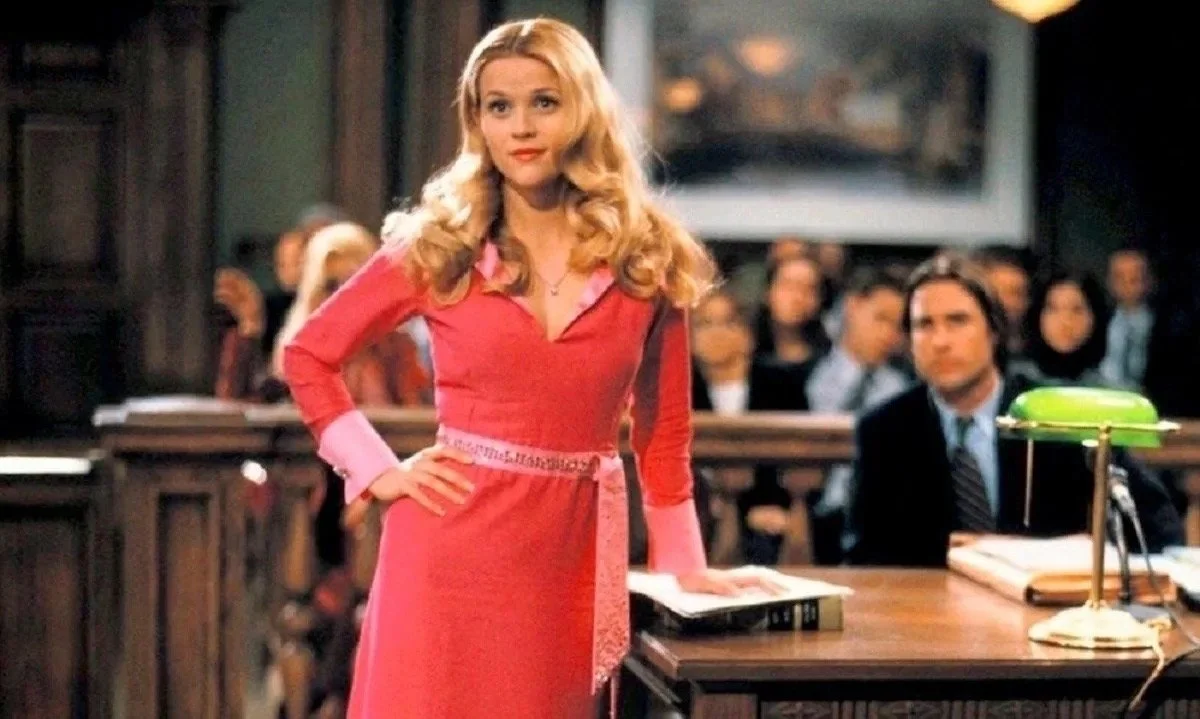
So for example, let’s consider Legally Blonde.
What does Elle Woods want? To become a serious law student.
Why does she want/need it? To prove to Warner that she is good marriage material.
What is the main conflict she will have to overcome in the film? The prejudicial assumption that being blonde makes her shallow and dumb.
Putting all these elements together, the dramatic question of Legally Blonde becomes something like:
Will Elle win over those who write her off as a dumb blonde in order to succeed at Harvard Law School and prove to Warner that she is the type of smart and serious girl he wants to marry?
The point of putting those core story elements together in one sentence, as one question, is that Elle’s story is shaped around this particular EMPHASIS. It’s the DNA of the film.
Of course, when we’re watching the film we recognise ten minutes into the movie that Warner isn’t worthy of her, but nonetheless the question of whether he will recognise her value remains consistently in frame. We might have stopped caring about what he thinks, but the story isn’t complete until this quest that originally set Elle on her journey to Harvard has been answered. It’s only at the climax after Warner declares that he was wrong and that she is the girl for him that Elle roundly rejects him as a bonehead who will hold her back in her own career.
It seems so straightforward when you’re looking at a finished film, but it’s remarkably easy when drafting a script to take the characters in a new direction, introduce pressing new conflicts or lose sight of why the character set out on this path in the first place.
A central dramatic question serves as a guardrail for the story. Ensuring every element feeds into the dramatic question, and every turning point restates it, will ensure the story stays on track to be satisfying and meaningful.
FORMULATING YOUR CENTRAL DRAMATIC QUESTION
We therefore encourage all the writers we work with to try to define the dramatic question of their screenplay this way.
Not just what does your character want, but also:
Why does it matter?
What will be the main obstacle they have to overcome? Or lesson they need to learn?
And to formulate those elements into a question starting with WILL.
Will my character overcome…..and/or learn…..to achieve…..in order to…..?
It might take you several drafts or outlines to get there, but once you can answer this with precision for your story you will have an invaluable tool to test potential story choices against.